Latitude 64
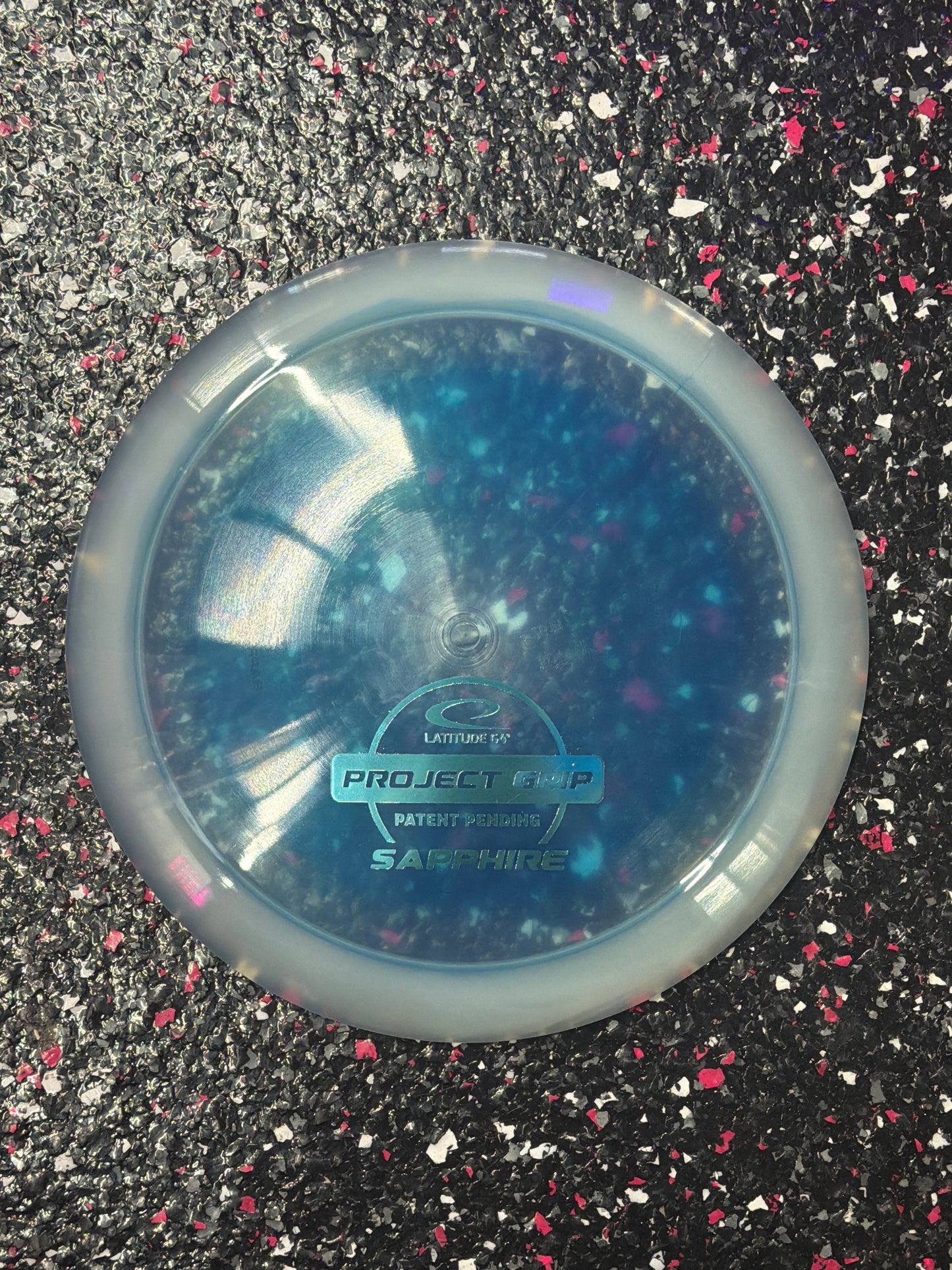
10/6/-2/1.5 Latitude 64 Sapphire - Project Grip
10/6/-2/1.5 Latitude 64 Sapphire - Project Grip
Couldn't load pickup availability
A sapphire spends years under pressure before anybody gets to call it beautiful. That feels about right for the Latitude 64 Project Grip Sapphire, because this driver is built for players who want real distance without pretending every tee shot needs to be launched like a professional trying to win Worlds on the final hole.
The Sapphire was designed to make distance-driver speed more accessible, and its 10/6/-2/1.5 flight numbers tell the story. It has enough speed to stretch well beyond a typical fairway driver, enough glide to keep working after the initial burst is gone, enough turn to help moderate arms create shape and distance, and just enough fade to keep it from wandering off like it forgot where the basket lives.
This Project Grip version adds a premium dual-blend construction with an exceptionally grippy surface and a firm, stable core. In plain English: the outside gives your hand something confident to hold onto, while the center keeps the disc from feeling floppy or vague. That combination makes the Sapphire easier to trust when the weather is cold, your hands are dry, the tee pad is dusty, or your nerves have decided to show up uninvited.
Flight
Speed 10 puts the Sapphire in the sweet spot between fairway control and full distance-driver speed. It is fast enough to produce meaningful distance, but the rim is not so demanding that you need elite arm speed or perfect timing just to make it fly. For many players, that means the Sapphire can become the first distance driver that actually behaves like the flight numbers instead of immediately dumping left and hurting everyone’s feelings.
Glide 6 is a major part of the appeal. The Sapphire wants to stay in the air. It carries forward, holds gentle shaping lines, and can squeeze extra distance out of a smooth release. Players who throw with moderate power will notice that the disc keeps moving even when the throw is not violent. Players with more power can use that glide to produce long hyzer flips, high turnovers, and controlled tailwind bombs.
Turn -2 gives the Sapphire its easy-distance personality. For a newer or slower-arm player, that turn helps the disc resist fading too early and creates a straighter overall flight. For an intermediate player, it can flip from hyzer to flat and cruise. For a stronger arm, it can move right on a backhand, carve a long turnover, or become a useful roller candidate when released with enough angle and commitment.
Fade 1.5 gives the Sapphire a mild, workable finish. It is not trying to spike into the ground or fight every ounce of turn. Instead, it offers enough late stability to settle down after the glide phase and finish with some predictability. On clean throws in calm conditions, expect a long, sweeping flight rather than a hard hook.
For beginners stepping into faster discs, the Sapphire can offer a noticeable distance jump without demanding superhero mechanics. It rewards smooth acceleration and clean nose angle. Throw it slightly nose-up and it may climb, stall, and fade early. Throw it clean and level, and it can show why accessible distance drivers are so useful.
Intermediate players will probably get the widest range of shots from it. A controlled hyzer release can flip to flat and carry straight. A flat release can drift right before gently returning. A slight anhyzer can produce a long turnover that keeps pushing instead of immediately fighting out. This makes the Sapphire especially useful on courses where shaping distance matters more than throwing as hard as humanly possible.
Power throwers should treat the Sapphire as a shaping driver rather than a wind-fighting workhorse. With enough speed, it will show turn quickly. That is not a flaw; that is the assignment. Give it height for a long turnover, use extra hyzer for a sweeping flip-up shot, or deploy it in a tailwind when you want maximum carry. Into a stiff headwind, however, the Sapphire may become more adventurous than you planned.
Backhand players will usually find the Sapphire easiest to unlock. Its turn and glide pair naturally with hyzer-flip mechanics. Forehand players with smooth form can also use it for controlled distance, but off-axis torque can make the disc turn hard and never come back. If your forehand release resembles opening a stuck jar with your entire upper body, this disc may expose the evidence.
Plastic
Project Grip is built around a dual-blend idea: an ultra-grippy premium surface paired with a firm, stable core. That gives the Sapphire a hand feel that is secure without becoming soft or floppy. The grip helps with confident releases, while the firm center keeps the disc feeling responsive and consistent through the pull.
The grippy exterior can be especially useful in cooler weather, dry climates, early-morning rounds, and any situation where slick premium plastic makes you feel like you are trying to throw a dinner plate covered in furniture polish. The goal is not tackiness for its own sake. The goal is a clean, repeatable release without needing to death-grip the rim.
The firm core also matters for a speed-10 driver. A disc this fast needs enough structure to feel stable in the hand and hold its shape during the throw. Project Grip keeps that solid feel while adding surface traction, creating a useful balance for players who want premium durability and confidence at the release point.
Like any premium driver, individual discs can show small differences in dome, weight, color, and parting-line height. Those details can affect how stable a specific Sapphire feels. A lighter or domier one may show easier turn and extra glide, while a heavier or flatter one may feel a touch more controlled. That is exactly why we leave room for color, plastic, and weight variants instead of pretending every disc coming out of a box is an identical little flying robot.
Project Grip should hold its flight longer than a base plastic, but every driver changes with wear. As the Sapphire seasons, it may begin flipping more easily, holding turnovers longer, and demanding more hyzer on full-power throws. For many players, that beat-in stage becomes the money flight: effortless hyzer flips, long drifting turnovers, and sneaky distance with less effort.
Best Uses
- First distance driver for players moving beyond fairway speeds
- Hyzer-flip distance shots with moderate arm speed
- Long, straight drives in calm conditions
- Controlled turnover shots that need to keep carrying
- Tailwind distance where glide matters more than brute stability
- Wide fairways that reward smooth shaping instead of hard fade
- Wooded distance lines with room for a gentle flip
- Uphill drives where extra glide helps fight elevation
- Players who get better results from timing than raw power
- Backhand distance for newer and intermediate players
- High anhyzer lines that need to drift for a long time
- Roller attempts for stronger arms or seasoned discs
- Cold or dry rounds where extra surface grip inspires confidence
- Players who want speed 10 distance without a giant rim
- Building a driver cycle from fresh and stable to seasoned and flippy
BDLD Real Talk
The Sapphire is not a secret cheat code, but it is one of those discs that can make distance feel less complicated. A lot of players buy distance drivers that are too fast, too overstable, or both. Then they throw them nose-up, watch them fade at the halfway point, and assume the answer is an even faster driver. That is how garages end up full of expensive meat hooks.
The Project Grip Sapphire takes a smarter route. It gives you enough speed to feel like a real distance driver, but the turn and glide actually help ordinary humans use that speed. You do not need to throw 450 feet to see the intended flight. You do need a reasonably clean release, because the Sapphire rewards smoothness and tattles on wobble.
Who should bag it? Players throwing fairway drivers well but not getting much extra from high-speed distance drivers. Intermediate players who want a workable hyzer-flip bomber. Experienced players who need a controllable understable driver for turnovers, tailwinds, uphill shots, and rollers. Anyone who prefers a grippy premium feel with a firm center should also give Project Grip a serious look.
Who should probably skip it? Players looking for a dependable headwind driver. Big arms wanting a flat-release disc that will never turn. Forehand players who rely heavily on torque instead of clean spin. If you need something to fight wind, absorb power, and finish hard every single time, the Sapphire is not applying for that job. Grab something more overstable and let this one do what it is good at.
The most common mistake will be throwing it too hard and too flat. Because the Sapphire has real glide and -2 turn, overpowering it can produce a fast trip toward the right side of the course for a right-handed backhand. Start with a small amount of hyzer, keep the nose down, and let the disc work. Smooth is not the same as weak. Smooth is how you stop donating plastic to the rough.
Another mistake is assuming accessible means beginner-only. It does not. A disc that is easy to get moving can still be extremely useful for better players. The difference is how it gets used. A newer player may throw the Sapphire straight with a gentle finish. An intermediate player may flip it for distance. A power thrower may use it for a towering turnover or roller. Same mold, different assignment.
Project Grip adds real value here because confidence in the hand matters with an understable distance driver. When you are trying to release on hyzer and trust the disc to flip, slipping early or hanging on late can wreck the line. The grippy surface helps you commit, and the firm core keeps the disc from feeling mushy when you apply power.
Compared with a very overstable distance driver, the Sapphire will be easier to throw far but less trustworthy in wind. Compared with a slower fairway driver, it can produce more distance but demands better nose-angle control. Compared with a maximum-speed understable driver, it is usually easier to grip and easier to get up to speed. That middle ground is exactly why the mold works.
At the counter, we would describe it this way: if your current distance driver mostly performs a dramatic left turn and lands angry, the Sapphire may be much closer to what you actually need. It will not fix every form issue, but it gives clean, moderate-power throws a real chance to become long throws. That is a much better bargain than buying another speed-14 disc and hoping intimidation creates distance.
Bottom Line
The Latitude 64 Project Grip Sapphire is an easy-distance speed-10 driver with serious glide, workable turn, a mild finish, and a premium grippy feel that encourages clean releases. It is best for players who want more distance without jumping into a wide-rimmed overstable monster, and it gives stronger throwers a useful tool for hyzer flips, turnovers, tailwinds, and rollers.
Bag it when you want distance that comes from timing, glide, and shape instead of trying to throw hard enough to alter local weather patterns. The Sapphire is proof that a driver does not need to fight you to earn a spot in the bag.
Share