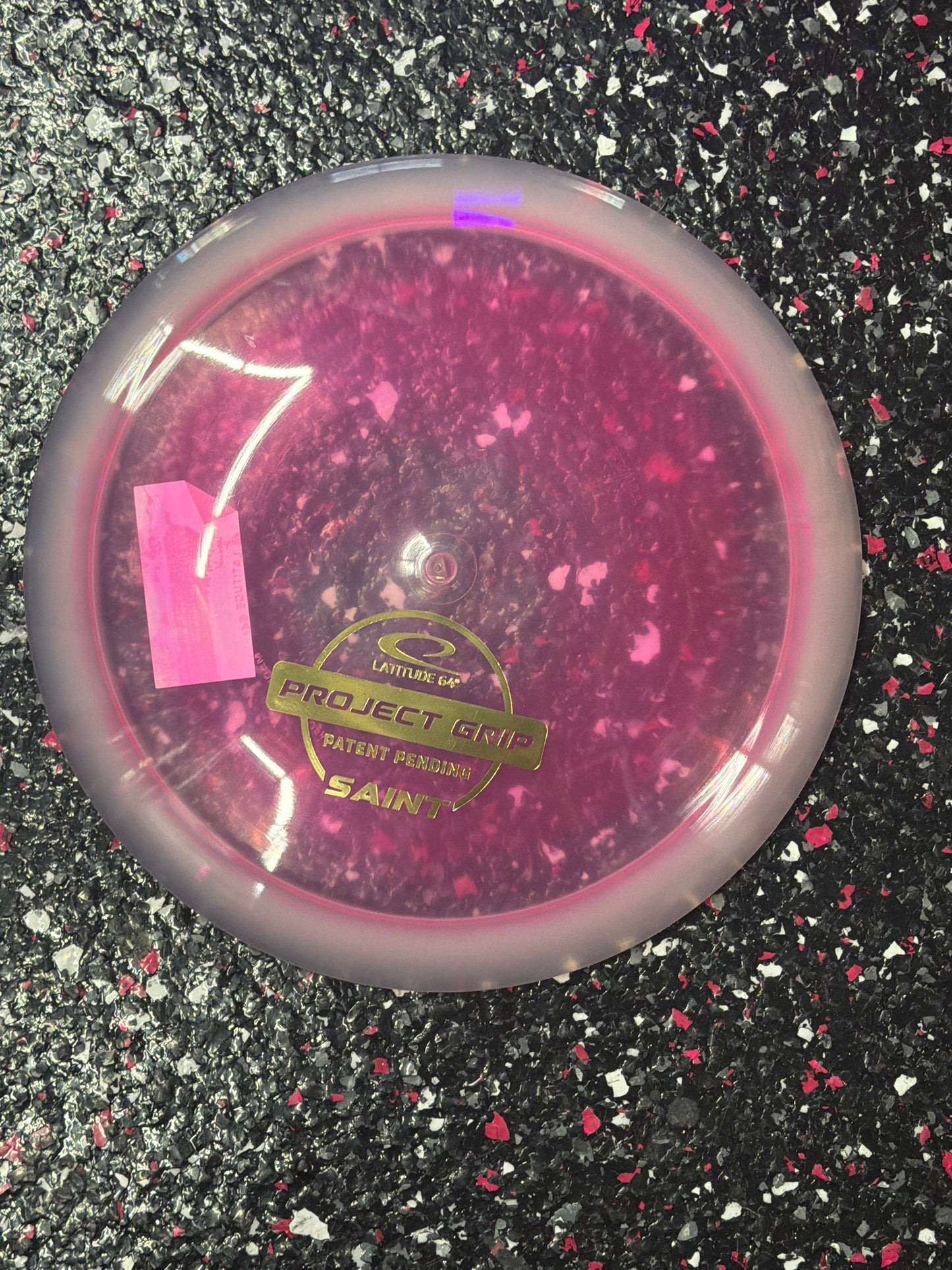
Latitude 64
9/7/-1/2 Latitude 64 Saint
9/7/-1/2 Latitude 64 Saint
Couldn't load pickup availability
A saint is supposed to be patient, dependable, and capable of pulling off the occasional miracle. The Latitude 64 Saint checks at least two of those boxes immediately, and on the right throw it may convince you of the third. This is the kind of driver that can take an ordinary-looking release, stretch it farther than expected, and still finish with enough manners to stay in the same zip code.
The Saint lives in that extremely useful space between a fairway driver and a full distance driver. At speed 9, it is fast enough to cover serious ground without demanding the arm speed, perfect timing, and emotional stability required by a 12- or 13-speed meat missile. Its huge glide is the headline, but the real appeal is how easily that glide can be shaped. Hyzer it, throw it flat, give it a little anhyzer, or let it work through a wooded tunnel—the Saint wants to stay in the air and make your shot look more intentional than it may have felt leaving your hand.
That does not mean the Saint is automatically holy. Throw it nose-up and it will float beautifully toward a location you did not request. Crank it into a headwind without enough hyzer and it may begin questioning its vows. Treat the angle with respect, though, and this mold becomes one of those discs that quietly starts handling more and more jobs until you realize it has been in your hand on half the tees.
Flight
9 | 7 | -1 | 2 — The Saint is a glide-heavy control driver with mild high-speed turn and a reliable, workable fade. The speed 9 rim gives it legitimate distance potential while remaining comfortable and manageable for players who are not trying to throw through the side of a barn. The 7 glide is not decorative. This disc wants airtime, carries forward exceptionally well, and can squeeze extra distance out of smooth form instead of demanding brute force.
For newer players with developing arm speed, the Saint will often fly straighter and more stable than the numbers suggest. Expect a forward-pushing flight with a dependable finish, especially when thrown with a little hyzer. It can be a smart first step into faster drivers because it offers meaningful distance without the sharp dump or wide rim of many high-speed options. The lesson is simple: throw it smoothly, keep the nose down, and let the glide do the heavy lifting.
Intermediate players are where the Saint really starts showing off. On a controlled hyzer release, it can stand up, drift forward, and finish gently. Thrown flat, it should carry straight with a touch of turn before a predictable fade. Add anhyzer and it can hold a sweeping turnover or shape a long flex line, depending on the plastic, wear, wind, and power. This is the player group most likely to discover that the Saint can replace several more specialized drivers for casual rounds and tight course layouts.
Power throwers should think of the Saint as a finesse tool rather than a torque-proof cannon. With clean spin and controlled power, it can produce long hyzer flips, gliding turnovers, and touchy distance lines that stay in the air forever. With full-power wobble, a strong headwind, or an aggressive forehand roll of the wrist, the Saint can turn more than intended. Big arms may prefer it for tailwinds, powered-down placement shots, rollers, and shaping lines where glide matters more than raw resistance to turn.
Backhand throwers will usually find the Saint easiest to unlock. Its combination of manageable speed and high glide rewards smooth acceleration and a clean release. Forehand players can absolutely use it, especially for touch forehands, gentle hyzer flips, and long shaping shots, but it is not the disc we would hand to someone who wants to mash every sidearm at maximum torque. Keep the wrist clean, avoid forcing it over, and the Saint can produce surprisingly elegant forehand distance.
In calm conditions or a tailwind, the Saint can feel like free distance. A mild crosswind is manageable when the release angle is deliberate. Into a meaningful headwind, however, the -1 turn and massive glide deserve respect. Reach for a more overstable control driver when the wind is trying to remove hats, scorecards, and small children from the property. The Saint is dependable, but it is not here to perform exorcisms on bad wind decisions.
Plastic
The Latitude 64 Saint is available in multiple plastics, and the exact feel and flight can shift from one blend to another. Premium plastics generally offer greater durability, a firmer or slicker feel depending on the blend, and a tendency to hold the original stability longer. Grippier or more flexible blends may feel more secure in cold or wet conditions and can season into easier-turning flight sooner. Lightweight versions may add effortless glide for slower arms, while heavier or more stable runs can offer more resistance to wind and torque.
Because this listing covers various plastics, do not assume every Saint will fly identically on day one. Dome, stiffness, weight, wear, and plastic type all matter. A fresh, stable premium Saint may fly like a straight control driver with a confident finish. A seasoned or naturally less stable one may become a hyzer-flip machine, long turnover specialist, or roller disc. That range is part of the mold’s value: you can build a small Saint lineup that covers several flights without changing the rim feel in your hand.
When choosing a variant, think about what job you need. Choose a more durable, stable-feeling option for reliable control, harder throws, and longer life. Choose a grippier or more workable option when comfort, shaping, and quicker seasoning matter more. Choose lighter weights for easier speed and extra carry, but understand that wind and off-axis torque may affect them more. The right Saint is not simply the prettiest one on the rack—although we fully support using that as a tiebreaker.
Best Uses
- Long, controlled tee shots where a fairway driver feels slightly short
- Hyzer-flip drives that rise to flat and carry down the center
- Straight distance lines with a dependable but not violent finish
- Wide, gliding turnovers that need to stay in the air
- Gentle flex shots through open fairways
- Tailwind distance shots that benefit from extra glide
- Wooded-course drives where placement matters more than maximum speed
- Players stepping up from speed 7 fairway drivers
- Intermediate players building one-disc confidence off the tee
- Powered-down control shots for advanced and high-power players
- Touch forehands that reward clean spin instead of brute torque
- Uphill drives where glide can help fight gravity
- Long rollers once the disc becomes seasoned or is released with enough angle
- Two-disc Saint cycles using one fresh and one beat-in version
- Rounds where you want distance without carrying a dinner-plate rim
BDLD Real Talk
The Saint is one of those discs that can make a player feel smarter because it rewards the things you should already be trying to do: throw smooth, control the nose angle, and stop attempting to solve every tee shot with violence. It has enough speed to be exciting, enough glide to produce real distance, and enough finish to keep useful lines from feeling completely reckless.
Who should bag it? Players throwing fairway drivers well but struggling to get consistent results from faster distance drivers should pay attention. So should intermediate players who want a versatile control driver for hyzer flips, straight shots, and turnovers. Advanced players can use it as a shaping disc, a tailwind bomber, or a powered-down placement option. It is especially useful for anyone who values glide and workable movement more than hard overstability.
Who should probably choose something else? If your home course is permanently windblown, your forehand comes out with enough torque to start farm equipment, or you need a disc that fights out of every bad angle, the Saint may be too cooperative. A more overstable speed 9 driver will be safer in those situations. Likewise, brand-new players who cannot yet get a neutral midrange or fairway driver to fly cleanly may not gain much by moving up in speed. The Saint is accessible, but it still expects a reasonably clean throw.
The most common mistake is seeing the 7 glide and trying to help it into the air. Do not. Nose-up Saint shots can climb beautifully, stall majestically, and fade into a neighboring county with all the grace of a stained-glass window falling out of a church. Keep the nose down and trust the disc. The glide works best when it is moving forward, not when it is trying to reach heaven.
The second mistake is treating every Saint like it will have the same stability. Different plastics, weights, runs, and stages of wear can change the flight enough to matter. Check the exact disc in your hand, especially if you are replacing an old favorite. A fresh premium Saint may be noticeably more stable than the beat-up one that has spent three years becoming your personal miracle worker.
Compared with a typical neutral speed 7 fairway driver, the Saint offers more speed, more carry, and a little more distance potential, but it also demands better nose-angle control. Compared with a very overstable speed 9 control driver, it is easier to throw straight and much easier to shape, but less trustworthy in a strong headwind. Compared with a high-speed distance driver, it gives up some theoretical maximum distance in exchange for a much better chance of landing where your actual skill level intended.
Our honest counter-talk answer: the Saint is not a magic disc, but it is one of the better molds for making smooth form look powerful. When it fits your arm speed, the distance comes without that desperate, full-body lunge that ends with you staring into the woods and pretending you were laying up. It can be forgiving, but it will also expose nose-up releases and sloppy torque. That is fair. Saints have standards.
Bottom Line
The Latitude 64 Saint is a glide-first speed 9 control driver for players who want workable distance without jumping straight into wide-rimmed chaos. With flight numbers of 9/7/-1/2, it can handle hyzer flips, straight drives, turnovers, controlled flex lines, tailwinds, and a huge range of everyday tee shots. Choose the plastic and weight that fit the job, throw it smooth, and give it room to carry.
Bag the Saint when you want a driver that rewards touch, stays useful as your game improves, and occasionally turns a perfectly ordinary throw into something that looks suspiciously blessed.
Share